
Understanding the Many Uses of Furniture with Charlotte Hasbroucq…
In an interior design project, furniture is not merely a “finishing touch.” It plays a role in organizing the space. It defines how the space is used, clarifies circulation patterns, and makes the spaces easy to understand.
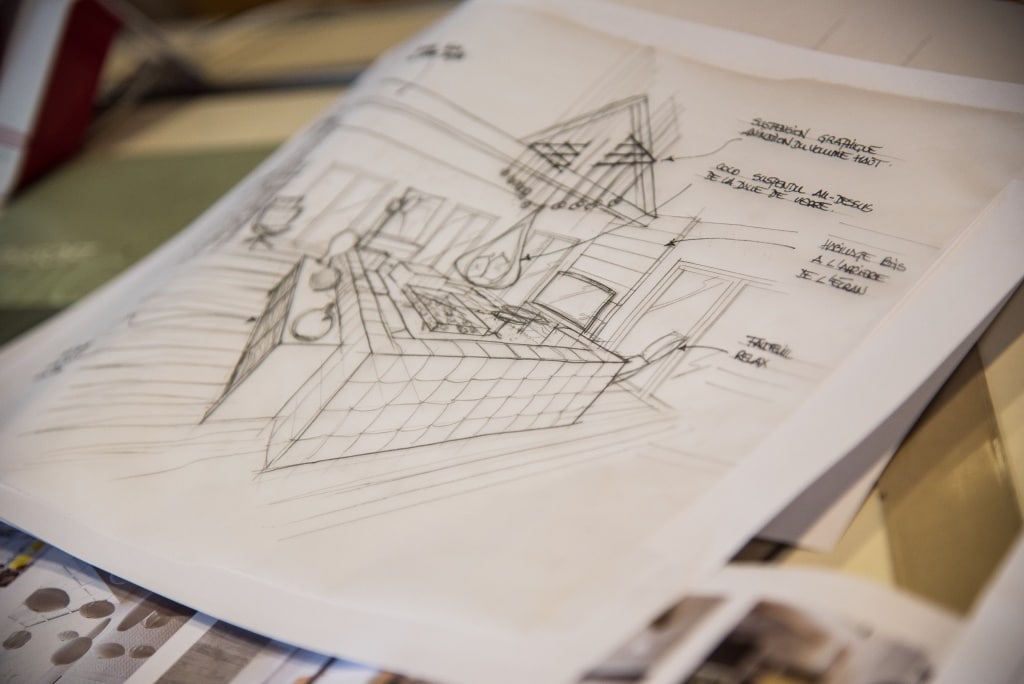
In this video, Charlotte, a project manager in the furniture division at Agence Amevet, describes a process that begins long before the selection of individual pieces. The goal is simple: to ensure that the space functions effectively on a day-to-day basis, both for its occupants and for its operational needs when it comes to a commercial project.
First and foremost, understand the uses
A cabin, an apartment, or a hotel raise different questions. But the starting point is the same: you have to analyze!
How do you enter the space?
How do you move around?
Where do you put your belongings?
How many people will use the space, and how often?
Floor plans, volumes, materials, technical constraints: everything is reviewed. The furniture comes next, as a response to these considerations. It must be aesthetically pleasing, functional, appealing, and durable, but it must also organize the space, facilitate its use, and highlight the project’s overall coherence.
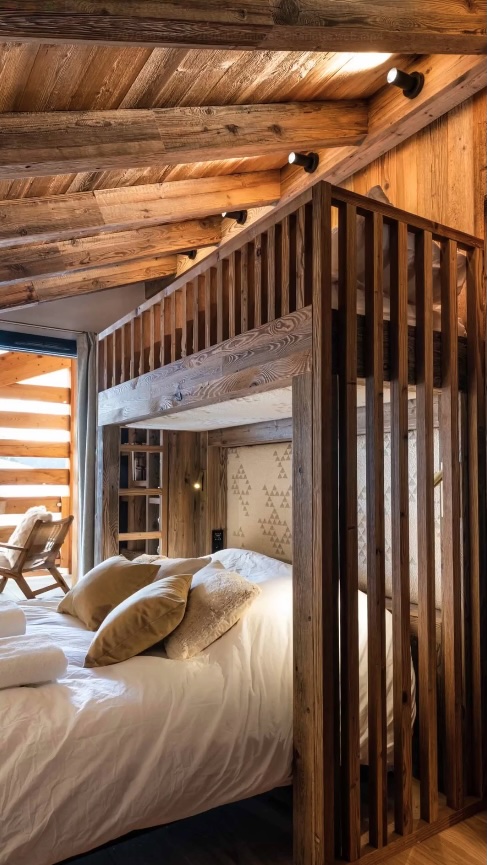
Shaping an identity by making concrete choices
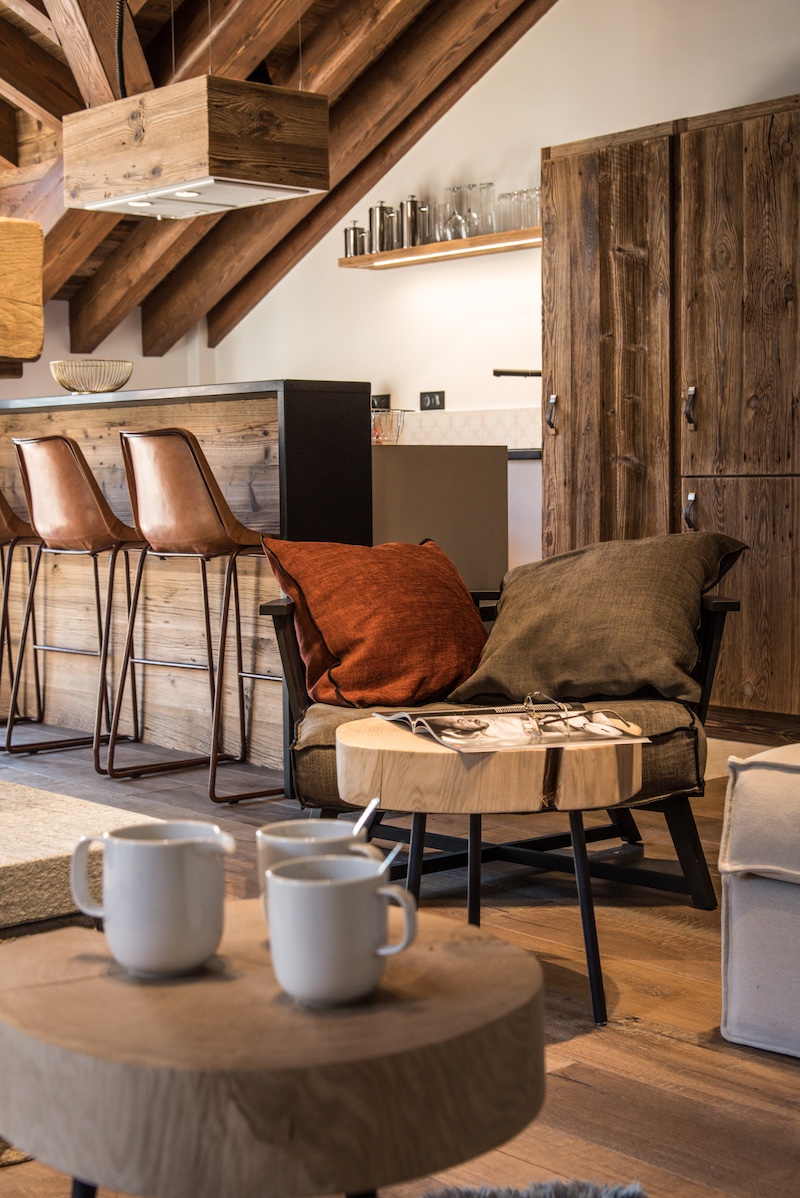
The work isn’t simply about choosing “beautiful furniture.” It’s about “composing” an overall picture! Furniture from manufacturers, custom-made pieces, unique items, decorative objects, vintage finds… each project calls for a specific combination. Every decision serves a purpose.
A sofa defines the size of a living room.
A table sets the stage for meals.
Storage simplifies daily life.
Some pieces define the space, others catch the eye, and still others give the whole arrangement a sense of breathing room. The goal isn’t to pile things up, but to find the right balance.
This process of selection, research, and curation allows us to avoid cookie-cutter spaces and create environments with a clear identity. In high-end settings—such as chalets, villas, hotels, and vacation resorts—this attention to detail plays a direct role in the venue’s appeal and its ability to leave a lasting impression.
Incorporate operational constraints
Furniture is also an operational issue.
In a hotel or vacation rental, the specifications are strict: durability, ease of maintenance, longevity…
In a rental property, the furniture must be both appealing and built to last.
In a residential project, the furniture must be adapted to residents’ lifestyles.
These factors directly influence the choices made: materials, dimensions, finishes, and layout.
Furniture becomes a tool for efficiency as much as it is an element of ambiance.
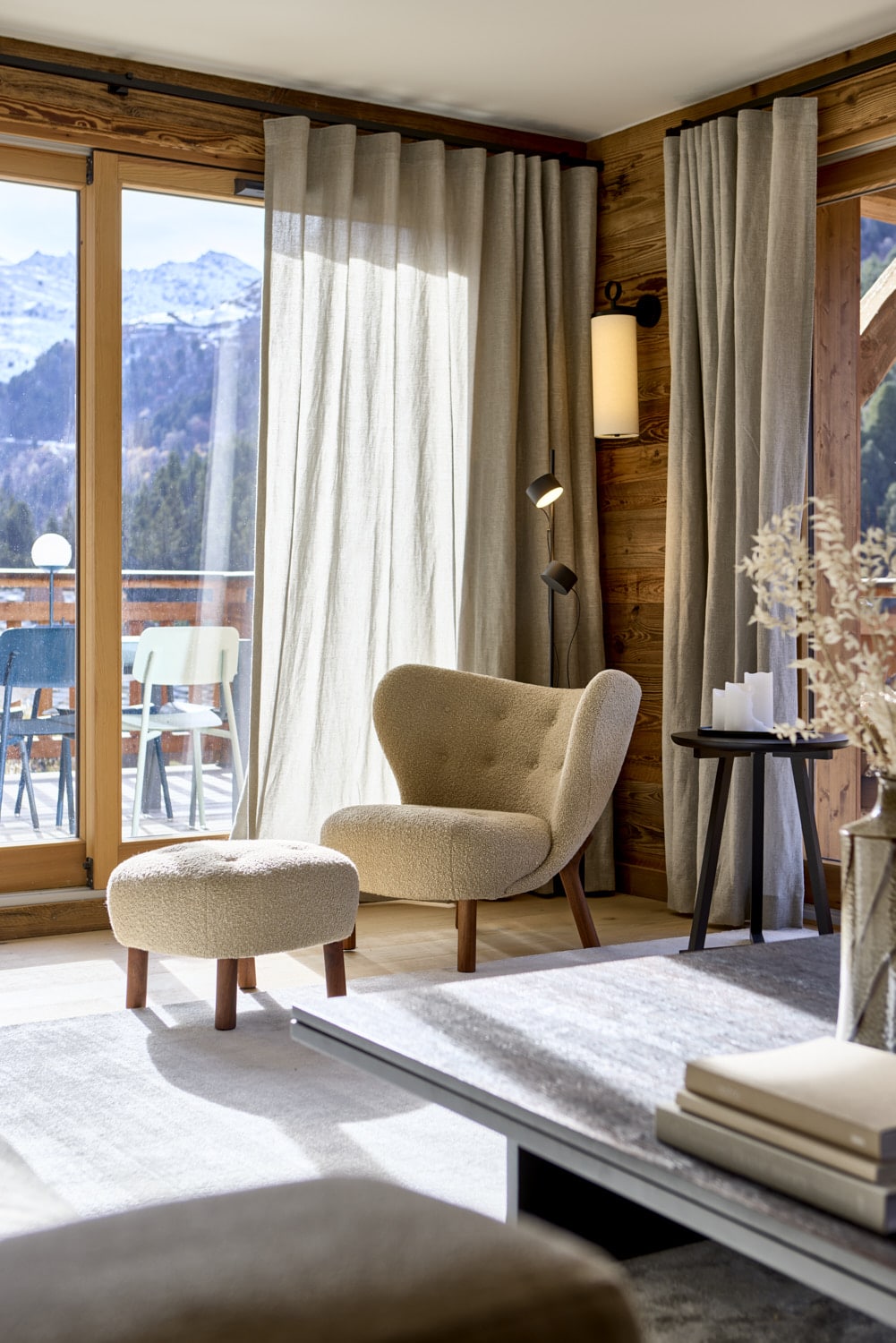
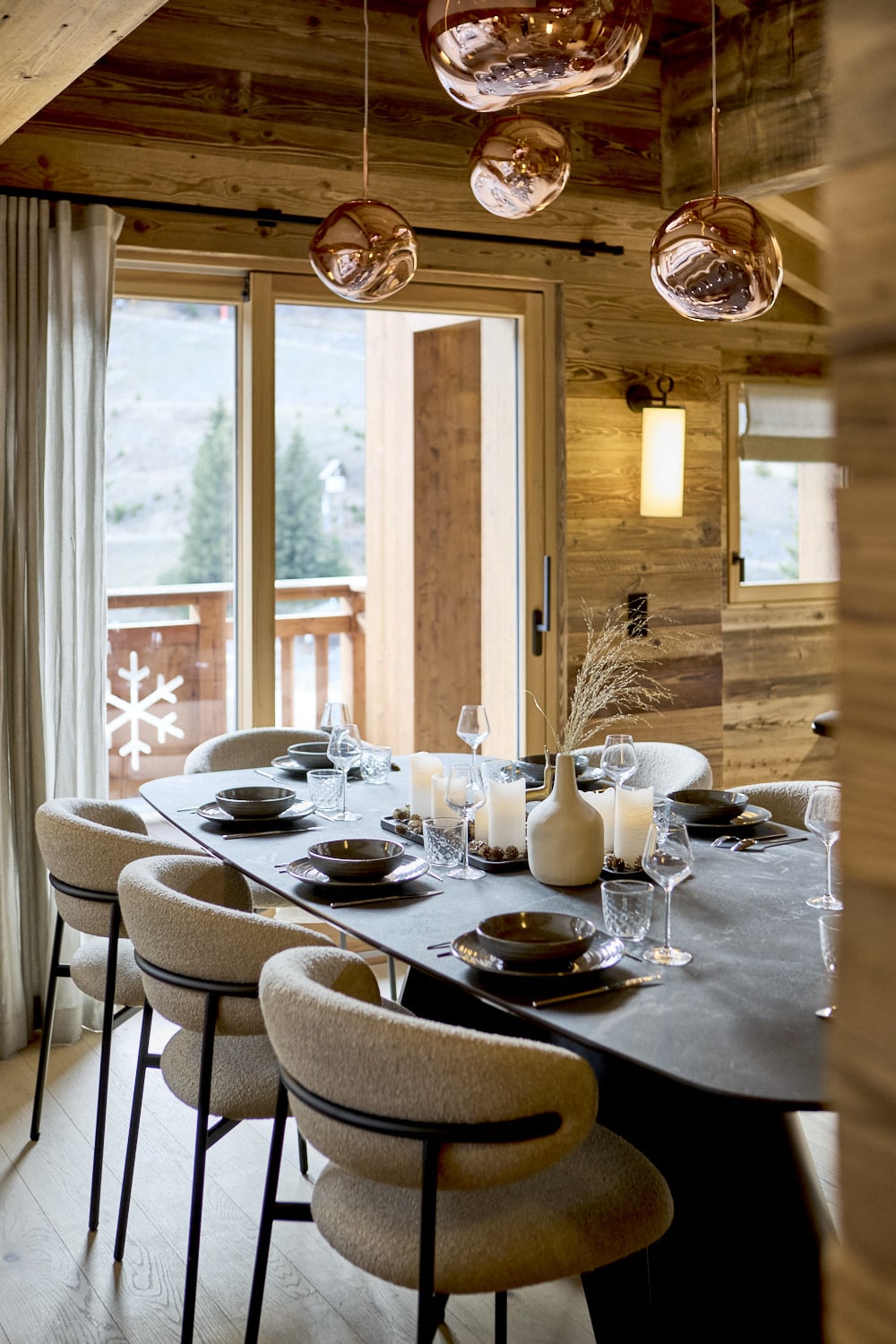
Furniture as a Tool for Creating Value
When we think about furniture, we’re thinking not only about the experience but also about its value.
Furniture has a direct impact on the quality of a project: it influences comfort, the clarity of spaces, and the overall perception of the location. When well-designed, it enhances the user experience, facilitates day-to-day operations, and helps increase the property’s value over time.
Use value for the end user. Operating value for the professional. Asset value for the owner.
Charlotte’s work fits into this approach, and we’ll let her have the last word: “Furniture is so much more than just pieces of furniture!”